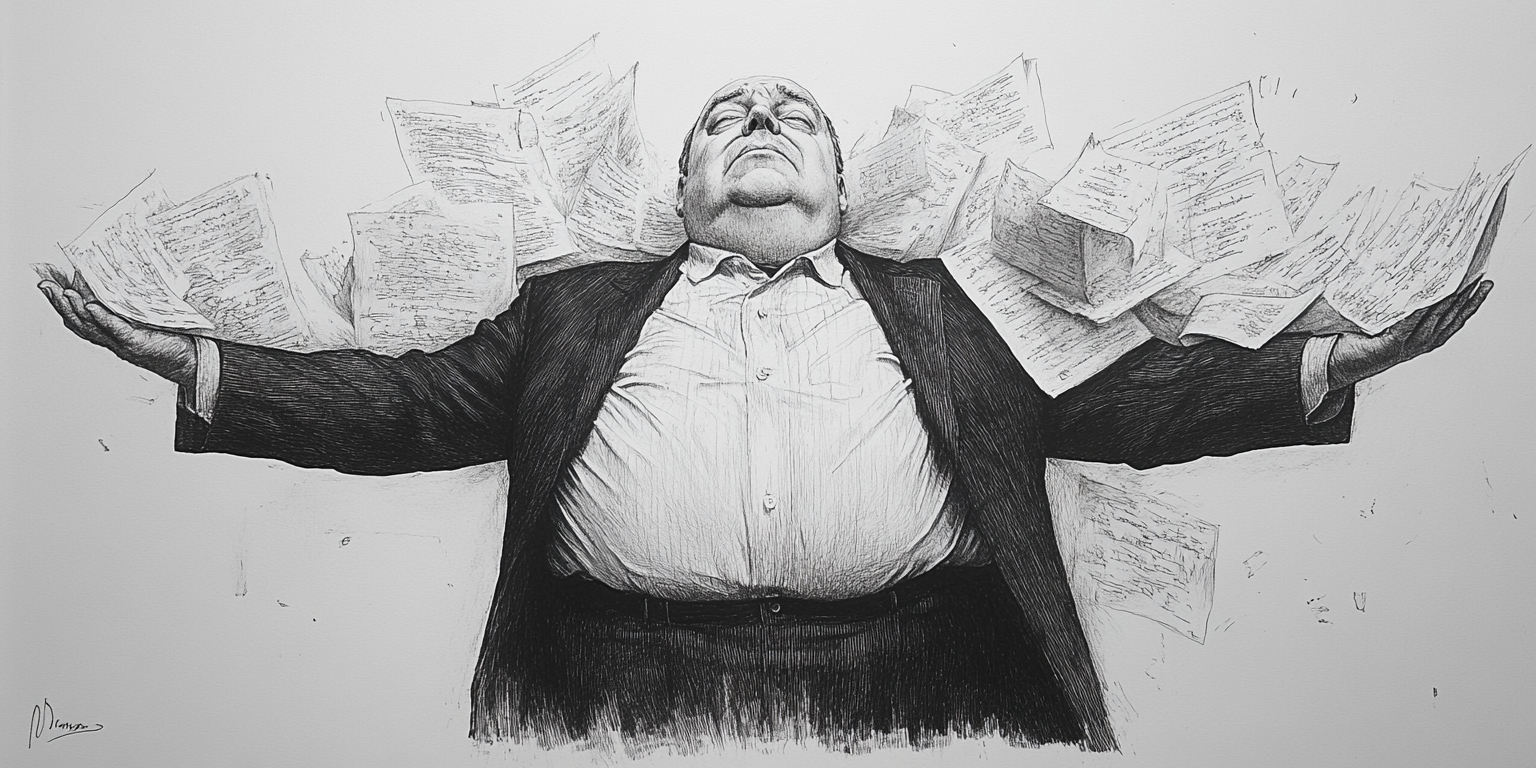
Voice, Not Volume: Winning the War for Attention
There’s a war happening right now for reader attention, and most of the advice about how to win it is exactly wrong.
Post more frequently. Publish on multiple platforms. Maintain a content calendar. Batch your writing. Optimize for algorithms. Increase your output.
Volume, volume, volume.
But here’s what the volume strategy misses: in a world where anyone can produce infinite content, more content is worthless. What’s scarce isn’t words. What’s scarce is meaning.
The writers who win the war for attention aren’t the ones publishing the most. They’re the ones whose work is worth paying attention to.
The Volume Trap
The logic of volume seems compelling at first. More content means more chances to be discovered. More posts mean more algorithm engagement. More output means more opportunities for something to go viral.
But follow this logic to its conclusion and see where it leads.
If volume is the strategy, then efficiency is the goal. Why spend ten hours on one piece when you could spend one hour each on ten pieces? Why craft when you can crank?
And now that AI can generate content instantly, the volume strategy reaches its absurd endpoint. Why write at all? Just generate. Flood the zone. Play the numbers game at infinite scale.
This is the trap. Once you’re competing on volume, you’re competing with machines. And machines will always win that competition. They don’t get tired. They don’t have standards. They don’t care.
The volume strategy is a race to the bottom, and the bottom has already arrived.
What Actually Captures Attention
Think about the writing that’s stuck with you. The articles you’ve saved. The books you’ve recommended to friends. The newsletters you actually read instead of archiving.
What do they have in common?
They sound like someone. Not a generic content-producer voice, but a specific human perspective you couldn’t get anywhere else. The writer’s personality comes through. Their particular way of seeing the world shapes how they present ideas.
They say something. Not just information that exists elsewhere, but a perspective, an argument, a take. The writer has thought about their subject and arrived at conclusions they’re willing to defend.
They reward attention. The piece gives you something in exchange for your time—insight, clarity, entertainment, emotional resonance. You finish reading and feel like it was worth it.
They’re crafted. The sentences work. The structure serves the content. The piece has been shaped and refined, not just produced.
Notice what’s not on this list: frequency. Volume. Posting schedule. The writing that captures attention does so because of what it is, not how often it appears.
Voice as Strategy
Your voice is the thing you have that no one else has. It’s your particular perspective, your specific way of processing and presenting ideas, your distinctive presence on the page.
Voice can’t be copied. It can’t be scaled. It can’t be generated by AI—at least not yet, and even then, any generated “voice” would just be an imitation of existing voices, not a genuine new perspective.
This makes voice the only sustainable competitive advantage in a world of infinite content.
When readers connect with your voice, they come back. Not because the algorithm showed them your work, but because they’re actively looking for it. Not because you posted today, but because they value what you create regardless of when you create it.
This is the difference between audience and followers. Followers are a number that goes up when the algorithm favors you and down when it doesn’t. An audience is people who know your name and seek out your work because they trust you to give them something valuable.
Volume builds followers. Voice builds audience.
Slowing Down to Stand Out
Here’s the counterintuitive move: in a world obsessed with speed and output, slowing down becomes a competitive advantage.
When you slow down, you have time to think. To develop ideas beyond the obvious. To find angles that aren’t immediately apparent. The writer racing to publish can only ever skim the surface. The writer who takes time can go deep.
When you slow down, you can craft. Sentences that sing instead of sentences that suffice. Structure that serves meaning instead of template structure that serves convenience. The small choices that accumulate into something memorable.
When you slow down, your standards rise. You catch the weak spots. You find the better word. You delete the unnecessary paragraph. Quality emerges from care, and care requires time.
The content treadmill tells you that slowing down means falling behind. But behind whom? Behind the machine-generated slop flooding every platform? Behind the writers burning out producing forgettable content at unsustainable pace?
There’s no honor in winning that race. There’s no point in competing in it at all.
The Math of Meaningful Work
Let’s do some rough math.
A writer producing daily content might generate 300 pieces per year. If each piece takes an hour to produce, that’s 300 hours yielding 300 forgettable posts.
A writer producing monthly, investing 30 hours per piece, generates 12 pieces per year with 360 hours invested. But those 12 pieces are crafted, substantial, memorable.
Which writer has more impact? Which one builds a real audience? Which one creates work that still gets read five years later?
The daily producer has more content. The monthly producer has more meaning. And meaning is what captures attention, builds trust, and sustains a writing life.
This isn’t about being precious or perfectionist. Some projects warrant quick execution. Some ideas don’t need extensive development. The point isn’t that everything should take forever—it’s that speed should be a choice, not a compulsion.
Choose depth when depth serves the work. Don’t let the content treadmill convince you that more is always better.
Building Connection Over Time
Voice isn’t just a writing style. It’s a relationship with readers built through consistency—not consistency of posting schedule, but consistency of quality, perspective, and trust.
When readers know what to expect from you—not when you’ll post, but what kind of value you’ll deliver—they develop loyalty. They recommend you to others. They become your advocates.
This kind of connection takes time to build. It can’t be hacked or accelerated. It’s the accumulated effect of showing up with work that matters, again and again, for long enough that people learn to trust you.
Volume can create a spike. Voice creates a foundation.
The spike fades. The foundation compounds.
Winning Differently
The war for attention doesn’t have to be fought on volume’s terms. You can opt out of that war entirely and fight a different one—a war for meaning, for connection, for work that matters.
In that war, voice wins. Craft wins. Caring about what you create wins.
The writers who thrive in the long term aren’t the ones who produced the most. They’re the ones who produced work that readers remembered. That made people think. That built genuine connection between writer and audience.
You don’t need to post every day. You don’t need to be everywhere. You don’t need to compete with machines for output volume.
You need to have something to say and to say it in a way that’s unmistakably yours.
That’s how you win. Not by being louder. By being worth hearing.
Voice, not volume. Connection, not content velocity.
In the end, that’s all that’s ever worked. The platforms change, the tools evolve, the pace accelerates—but the writers who endure are still the ones who mastered the simple, difficult art of writing something that matters.
That’s the only strategy worth pursuing. And unlike volume, it never burns you out.