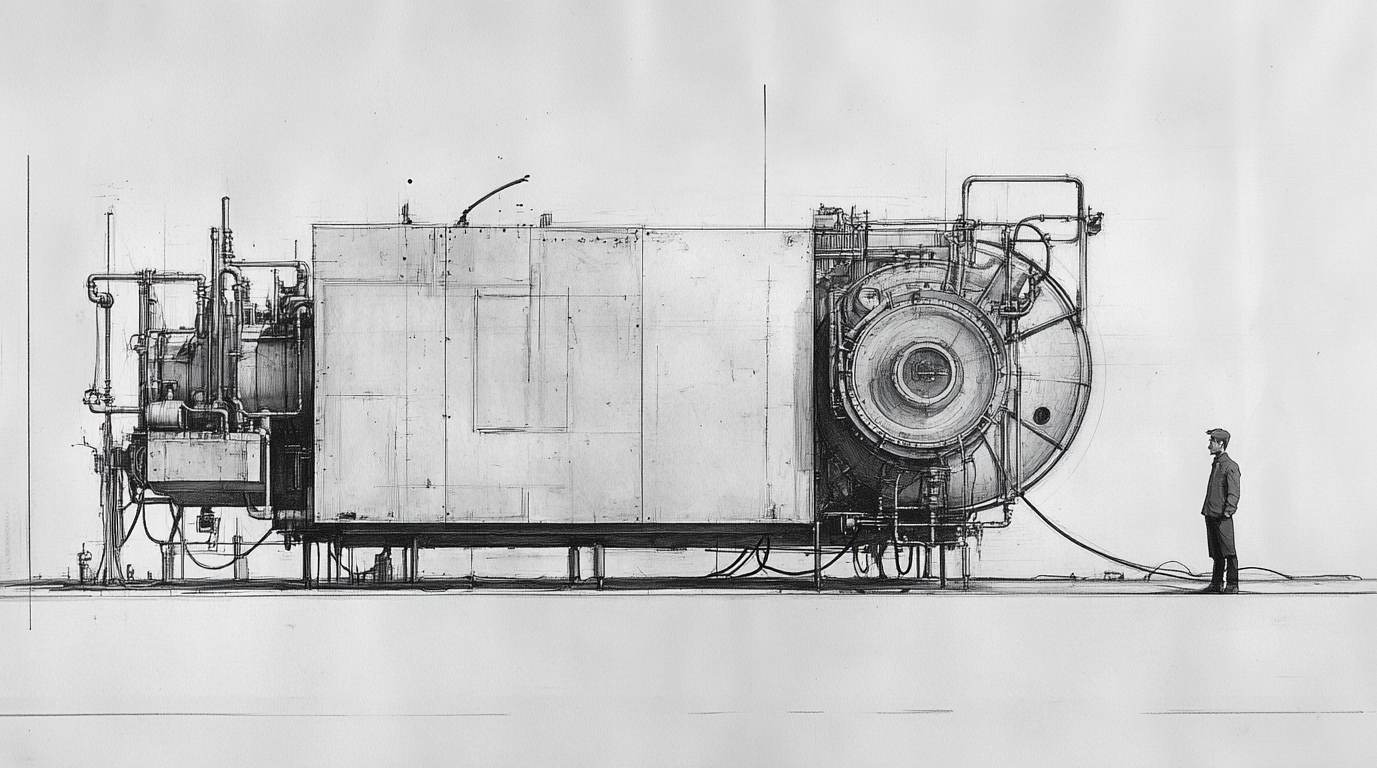
Writing in the Shadow of the Machine
There’s a particular kind of vertigo that hits writers now.
You’re halfway through a paragraph, the words coming the way they sometimes do when things are working, and then a thought intrudes: Could a machine do this? Would anyone know the difference? Does this even matter anymore?
The cursor blinks. The momentum breaks. And suddenly you’re not writing—you’re questioning whether writing is something you should still be doing at all.
If you’ve felt this, you’re not alone. And you’re not crazy. Something real has shifted, and it’s worth looking at directly.
The Shadow
For most of human history, writing was unambiguously human. The struggle to find the right word, to shape a sentence that captured what you meant, to revise until the thing finally worked—that was craft. It took years to develop. It couldn’t be faked.
Now there’s a machine that produces fluent prose on demand. It doesn’t struggle. It doesn’t revise. It doesn’t care whether the words are right because it doesn’t know what “right” means. It just generates, endlessly, confidently, instantly.
And it’s everywhere. In your email. In your search results. In the articles you read and increasingly in the ones you’re asked to compete with.
This is the shadow. Not the machine itself, but what it does to your sense of yourself as a writer.
When the thing that took you decades to learn can be approximated in seconds, what does that say about the value of those decades? When your hard-won skill looks, to a casual observer, like something anyone can have for free, what happens to your identity?
These aren’t abstract questions. They’re the 3 AM thoughts that keep working writers awake.
The Impostor’s New Clothes
Here’s the twist: the rise of AI hasn’t just created impostor syndrome in writers. It’s created actual impostors.
There are people publishing books they didn’t write. Bylines on articles no human crafted. Content farms churning out material that looks like writing but was never touched by a mind that cared about it.
And readers often can’t tell. That’s the part that stings.
You spent years learning to write well, and now the market is flooded with machine-generated text that’s good enough to fool people who aren’t paying close attention. Your carefully crafted work sits next to AI slop, and to the algorithm, they’re equivalent. Just more content. Just more words.
It’s enough to make you wonder why you bother.
The Wrong Question
But “why bother?” is the wrong question. It accepts the machine’s frame—that writing is about producing text, and whoever produces it fastest and cheapest wins.
That’s not what writing is. That’s not what it’s ever been.
Writing is thinking made visible. It’s the act of wrestling with ideas until they submit to language. It’s discovering what you believe by trying to articulate it. It’s the strange alchemy of turning private experience into public meaning.
The machine doesn’t do any of this. It predicts likely word sequences. It has no beliefs to discover, no experiences to transform, no wrestling to do. The output might look like writing, but the process that created it isn’t writing.
You’re not in competition with AI any more than a chef is in competition with a vending machine. Yes, both produce food. No, they’re not doing the same thing.
Reclaiming Your Identity
So how do you write in the shadow of the machine without being consumed by it?
Remember what you’re actually doing. You’re not producing content. You’re making sense of your experience and offering that sense-making to others. The machine can’t do this because it has no experience to make sense of. Every time you write from genuine understanding, you’re doing something it cannot.
Write what only you can write. The machine excels at the generic—the article that could have been written by anyone, the prose that sounds like everything else. It struggles with the specific, the personal, the weird. Your particular angle on a topic, shaped by your particular life, is something no model can replicate. Lean into that.
Care about the process, not just the product. If writing is only valuable for its output, then yes, the machine wins. It’s faster and cheaper. But if writing is valuable for what it does to your thinking, for the clarity it forces, for the discovery it enables—then the machine is irrelevant. It’s not having the experience you’re having when you write.
Reject the frame of competition. You’re not trying to beat the machine. You’re trying to do something the machine isn’t capable of doing. The fact that it can produce text doesn’t diminish what you’re doing any more than a player piano diminishes a jazz musician. Different activities, different purposes, different souls (or lack thereof).
Connect with readers who want connection. Not everyone wants AI slop. There are readers actively seeking human voices, human perspectives, human presence on the page. Write for them. They exist, they’re hungry for what you offer, and they’ll find you if you keep showing up.
The Light Beyond the Shadow
Here’s what the shadow obscures: the machine might actually be clarifying what matters about writing.
For decades, a lot of professional writing was essentially mechanical. Formulaic articles, SEO-optimized posts, content designed to fill space rather than say something. Writers did this work because it paid, but it was never the point. It was never the craft.
Now the machine can do that work. And that frees human writers to focus on what machines can’t do: the writing that requires genuine thought, real experience, actual stakes.
The shadow of the machine is dark, but it has an edge. Beyond it is a space where human writing becomes more valuable, not less. Where the writers who remain are the ones who have something to say and the skill to say it. Where quality matters more than quantity because quantity is now infinite and therefore worthless.
You’re Still a Writer
The machine doesn’t change what you are. It doesn’t invalidate your experience or erase your skill. It doesn’t make your voice less yours or your perspective less valuable.
What it does is force a question you maybe avoided before: Are you writing because you have something to say, or just because you know how to arrange words?
If it’s the former, the machine is no threat. It’s just noise in the background, easily ignored once you remember what you’re actually doing.
If it’s the latter—if you’ve been going through the motions, producing text without conviction—then maybe the machine is doing you a favor. Maybe it’s pushing you to find the thing that makes your writing yours. The thing no algorithm can touch.
The shadow is real. The disorientation is real. But so is the opportunity to recommit to what writing actually means.
You’re a writer. Not because you produce text, but because you think in language, feel in stories, and believe that putting words together in the right order can change how people see the world.
The machine will never understand that. And it will never take it from you.